
Aging isn't about calcium buildup - it is about calcium leak
How everyday sugar and salt cause tiny leaks inside your cells—and how Magnesium and Vitamin K2 help fix them.
For almost 40 years—ever since a brain scientist named Zaven Khachaturian first shared the idea in the 1980s—scientists thought cells got old simply because too much calcium piled up inside them over time.
Today, scientists have discovered a much clearer answer.
Aging isn't about having too much calcium. It’s about calcium leaking into the wrong places.
Think of each cell in your body like a tiny house with a locked storage vault inside. Young, healthy cells keep their calcium safely locked inside that vault. When your heart needs to beat, a muscle needs to flex, or a brain cell needs to send a thought, tiny gates on the vault open for a split second to let out a quick puff of calcium—and then snap right back shut.
As we get older—especially when our bodies deal with stress from the foods we eat—those tiny gates get rusty and stop closing all the way. Calcium starts dripping out all day long. Now, the main floor of the cell is flooded with loose calcium, while the storage vault is too empty to work properly.
Even more interesting: two common things in modern diets act like a "one-two punch" that makes this leak worse, while two helpful nutrients act like a repair crew.
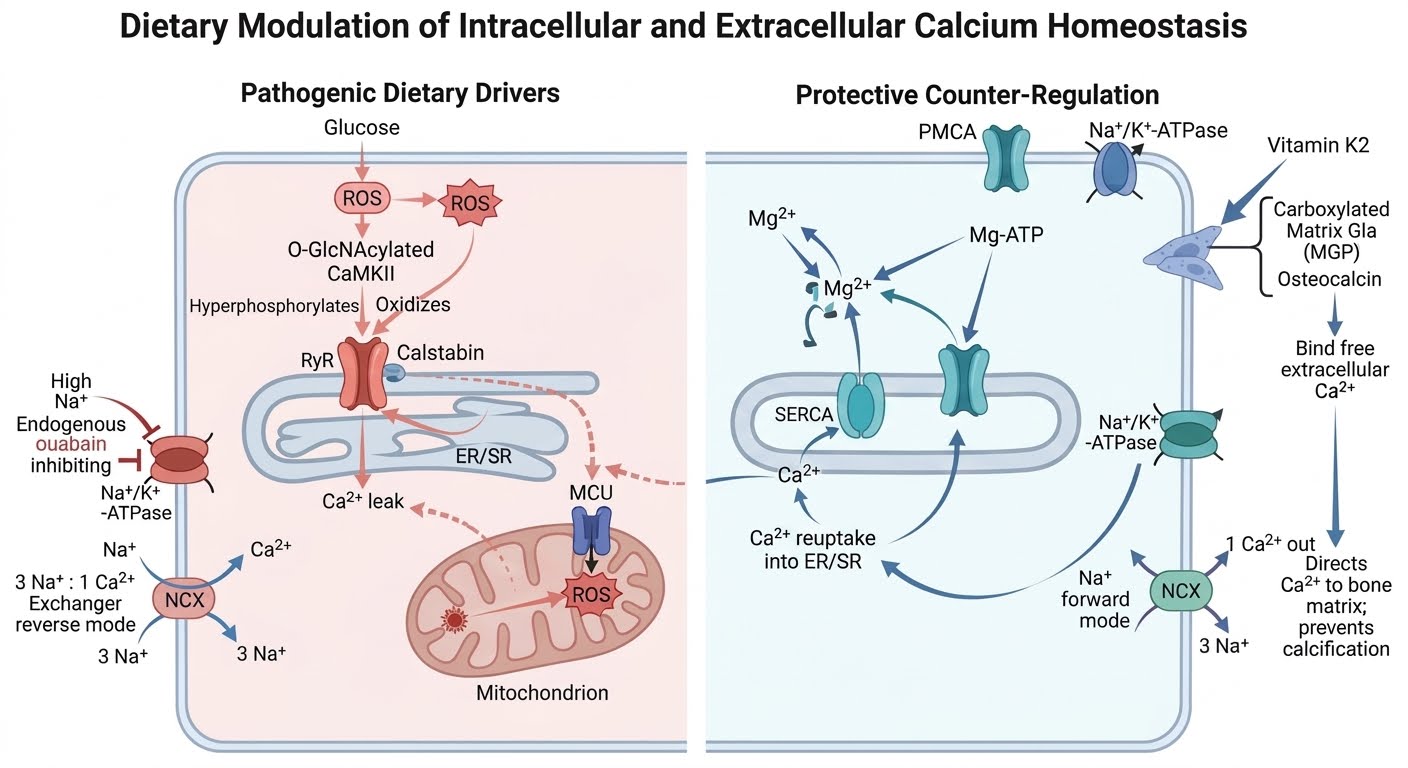
1. The "One-Two Punch": Sugar Opens the Leak, Salt Blocks the Exit
🍬 Too Much Sugar Opens the Vault Gate
When we eat lots of sugary snacks, candy, soda, or white bread, our blood sugar shoots up fast. That sugar spike creates tiny sparks of stress inside our cells.
Those sparks switch on a helper molecule that accidentally bumps off the "locks" holding the calcium vault shut. Without those locks, calcium leaks out nonstop. The cell's tiny power plants (called mitochondria) try to soak up the extra mess, which wears them out and drains the cell's energy.
🧂 Too Much Salt Blocks the Exit Door
At the exact same time sugar is opening the vault leak, too much salt blocks the cell's front door.
Normally, cells have a special revolving door that trades 3 pieces of sodium (salt) coming in for 1 piece of calcium going out. When you eat too much salty food, extra sodium crowds around the door and jams it up. The revolving door gets stuck—or even spins backward, pushing more calcium inside the cell instead of letting it out!
2. The Repair Crew: Magnesium and Vitamin K2
While too much sugar and salt push calcium into the wrong spots, two super-helpful nutrients put everything back where it belongs:
- Magnesium — The Gate Lock & Pump Battery: Inside the cell, magnesium is like calcium’s calm older sibling. It steps right up to the leaky vault gates and holds them shut so calcium stops dripping out. Magnesium also teams up with the cell’s energy molecules to power the tiny "vacuum pumps" that sweep loose calcium back into the vault and clear out extra sodium.
- Vitamin K2 — The Traffic Cop: Outside the cell, Vitamin K2 wakes up two special helper proteins. One protein acts like a sponge that grabs loose calcium floating near your blood vessels so your arteries stay soft and flexible instead of turning stiff. The other protein directs that calcium straight into your bones and teeth, where it actually belongs!
Why This Matters for Your Whole Body
When calcium leaks out of its vaults for many years, the parts of your body that use calcium the most start to feel it:
- Heart & Blood Vessels: Leaky gates in heart cells can make the heart beat out of rhythm, while extra calcium in blood vessel walls can make blood pressure go up.
- Muscles: When muscle vaults run low on calcium, muscles can't squeeze as strongly, making people feel weaker as they age.
- Brain & Memory: Brain cells need quick, clean bursts of calcium to learn and remember things. Constant leaks make it harder for brain cells to talk to each other.
4 Simple Habits to Keep Your Cells Healthy
You don't need anything complicated to protect your cells' calcium balance—just four everyday habits:
- Go easy on sugary foods and drinks so sugar spikes don't knock the locks off your calcium vaults.
- Watch out for extra-salty foods so your cells' exit doors stay clear and working smoothly.
- Eat magnesium-rich foods like spinach, pumpkin seeds, almonds, beans, and oatmeal to keep vault gates shut and power your cell pumps.
- Include Vitamin K2 foods like cheese, fermented foods (like natto), and pasture-raised eggs to guide calcium into your bones instead of your blood vessels.
Adapted from the scientific paper, "The Synergistic Role of Hyperglycemia, High Sodium, and Micronutrient Deficiencies in Age-Related Intracellular Calcium Dysregulation" (Kim & Lewis).


